It is perhaps one of the most famous metaphors in American literature: the caged bird that sings not out of joy, but out of necessity.
Today on Stanza & Story, we turn to Paul Laurence Dunbar, the first African American poet to gain national distinction. Born in 1872 to formerly enslaved parents, Dunbar possessed a unique ability to code-switch between dialect poetry and standard English verse.
In this piece, titled “Sympathy” (1899), Dunbar explores the physical and psychological toll of confinement. While often read as a metaphor for the Black experience in post-Reconstruction America, the poem’s plea for freedom is universal. Its famous final line later inspired the title of Maya Angelou’s autobiography, cementing its place in the literary canon.
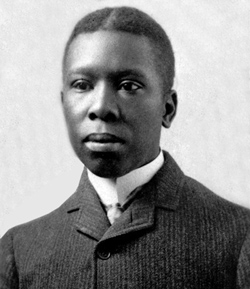
Featured above is a portrait of Dunbar from the late 1890s. Looking at his intense gaze, we can sense the burning desire for expression that fuels the verses below.
Here is Paul Laurence Dunbar’s vision of the caged bird.
“Sympathy”
by Paul Laurence Dunbar
I know what the caged bird feels, alas! When the sun is bright on the upland slopes; When the wind stirs soft through the springing grass, And the river flows like a stream of glass; When the first bird sings and the first bud opes, And the faint perfume from its chalice steals— I know what the caged bird feels!
I know why the caged bird beats his wing Till its blood is red on the cruel bars; For he must fly back to his perch and cling When he fain would be on the bough a-swing; And a pain still throbs in the old, old scars And they pulse again with a keener sting— I know why he beats his wing!
I know why the caged bird sings, ah me, When his wing is bruised and his bosom sore,— When he beats his bars and he would be free; It is not a carol of joy or glee, But a prayer that he sends from his heart’s deep core, But a plea, that upward to Heaven he flings— I know why the caged bird sings!
 Stanza & Story
Leave a comment